
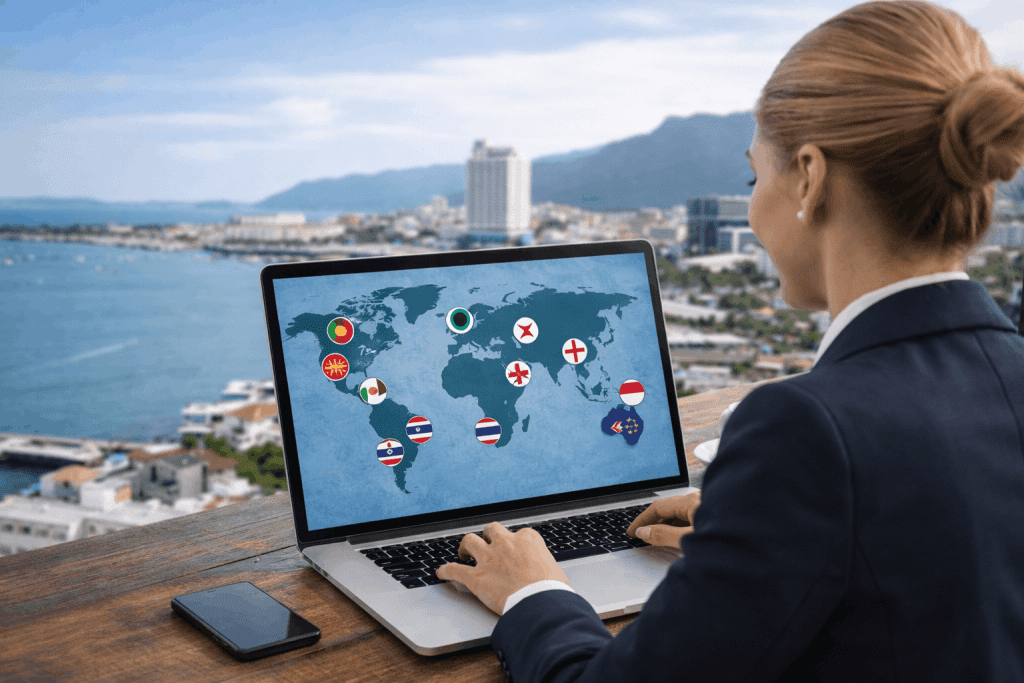
The rise of remote work has permanently redefined the way professionals think about where they live and how they work. In 2026, more individuals than ever are trading traditional office environments for location-independent careers — and governments around the world are responding with dedicated digital nomad visas, tax incentives, and remote-work-friendly policies designed to attract global talent.
But with hundreds of destinations to choose from, the question is no longer can you work remotely from abroad — it is where should you go?
This guide breaks down the 10 best countries for digital nomads in 2026, evaluated across the factors that matter most: visa accessibility, cost of living, internet infrastructure, safety, lifestyle quality, and global mobility.
What Makes a Country Ideal for Digital Nomads?
Choosing where to live and work as a digital nomad is one of the most consequential decisions a remote professional can make. It goes far beyond finding a place with good Wi-Fi and warm weather. The right destination should support your productivity, protect your legal standing, fit your financial reality, and genuinely enhance the way you live day to day.
Over the years, certain patterns have emerged that consistently separate destinations that work well for remote professionals from those that simply sound appealing on paper. Before exploring the list, it is worth understanding the six pillars we used to evaluate each country — because these are the same factors that will ultimately determine whether your experience abroad is a success or a setback.
- Visa Framework — A country may be beautiful and affordable, but without a clear legal pathway for remote workers, long-term stays become complicated and uncertain. We looked for destinations that offer dedicated digital nomad or remote work visas with transparent requirements and reasonable processing timelines.
- Cost of Living — Financial sustainability matters. The ability to maintain a comfortable, high-quality lifestyle without depleting savings is a non-negotiable factor for most remote professionals. We considered not just headline costs but the full picture — housing, healthcare, food, transport, and leisure.
- Internet Connectivity — Reliable, fast internet is the foundation of any remote career. A stunning location quickly loses its appeal when deadlines are missed due to poor connectivity. We prioritized countries with proven broadband infrastructure across both urban centers and popular nomad hubs.
- Safety & Stability — Peace of mind is not a luxury — it is a prerequisite. Political stability, personal safety, and a secure social environment are essential for anyone considering a long-term international stay, particularly for those relocating with families.
- Lifestyle & Community — Remote work can be isolating without the right environment around you. The presence of an established international community, quality coworking spaces, wellness infrastructure, and a genuine sense of belonging significantly impacts both productivity and personal wellbeing.
- Global Mobility — For professionals who travel frequently or manage international business relationships, a destination’s connectivity to the rest of the world — through residency benefits, visa-free travel access, or strategic geographic positioning — adds meaningful long-term value.
- These six benchmarks formed the foundation of our evaluation. With that framework in place, here are the ten countries that stood out above the rest for digital nomads in 2026.
1. Portugal — Best European Country for Digital Nomads
Portugal has consistently ranked among the world’s top digital nomad destinations, and 2026 is no exception. Its Digital Nomad Visa offers a clear, structured pathway for remote workers and freelancers to establish legal residency in one of Europe’s most livable countries.
Key Highlights:
- Dedicated Digital Nomad Visa with straightforward eligibility criteria
- Affordable cost of living compared to other Western European nations
- High-speed internet infrastructure across major cities and coastal regions
- Thriving international nomad communities in Lisbon, Porto, and Madeira
- Gateway to full European Union residency and travel
Best Cities: Lisbon, Porto, Madeira, Algarve
Ideal For: Remote employees, freelancers, and entrepreneurs seeking European base with long-term residency potential.
2. United Arab Emirates — The Global Business Hub
The UAE, particularly Dubai and Abu Dhabi, has firmly established itself as a world-class destination for remote professionals and entrepreneurs. The country’s Virtual Working Programme allows individuals to live in the UAE while employed abroad, with access to one of the most connected, modern, and cosmopolitan cities in the world. Zero income tax, exceptional infrastructure, and a strategic time zone bridging East and West make it a top-tier choice for high-performing professionals.
Why It Stands Out: Tax-free income, elite infrastructure, global connectivity, and a dynamic international business community.
3. Spain — Best for Work-Life Balance in Europe
Spain’s Digital Nomad Visa, introduced under the country’s Startup Law, has quickly positioned the country as one of Europe’s most attractive destinations for location-independent professionals. Beyond the legal framework, Spain offers an exceptional quality of life that few countries can rival.
Key Highlights:
- Formal Digital Nomad Visa with a pathway to EU long-term residency
- Diverse city options catering to different professional and lifestyle preferences
- Warm Mediterranean climate and rich cultural environment
- Excellent public healthcare and transportation infrastructure
- Competitive cost of living relative to Northern and Western Europe
Best Cities: Barcelona, Madrid, Valencia, Seville, Málaga
Ideal For: Remote professionals and families seeking a balanced European lifestyle with strong cultural and social amenities.
5. Malaysia — Asia’s Most Accessible Nomad Base
Malaysia’s DE Rant Pass (Digital Nomad Visa) offers remote workers a straightforward pathway to living in one of Southeast Asia’s most sophisticated and affordable countries. Kuala Lumpur delivers a world-class urban experience — modern coworking spaces, outstanding food, excellent healthcare, and seamless connectivity — at a fraction of the cost of comparable cities in the West. The country’s political stability, English proficiency, and cultural diversity further strengthen its appeal as a long-term nomad base.
Why It Stands Out: Affordable urban lifestyle, strong digital infrastructure, English-speaking environment, and strategic Asian location.
6. Costa Rica — Pura Vida Meets Professional Productivity
Costa Rica’s Rentista and Digital Nomad Visa options have attracted a growing wave of remote professionals drawn to its unique blend of natural beauty, political stability, and modern amenities. San José offers a functional urban base with coworking spaces and reliable internet, while coastal towns like Tamarindo and Santa Teresa provide a lifestyle that is difficult to match anywhere in the world. Costa Rica’s commitment to sustainability, safety, and quality of life makes it a standout choice in the Americas.
Why It Stands Out: Natural environment, political stability, active nomad community, and a well-structured visa pathway.
7. Georgia — Low Tax, High Freedom
Georgia has rapidly emerged as one of the most strategically attractive destinations for digital nomads and location-independent entrepreneurs. The country’s Remotely from Georgia programme, combined with a flat 1% tax rate for eligible freelancers and a highly liberal visa policy, creates a uniquely compelling financial and lifestyle proposition. Tbilisi offers a distinctive blend of ancient architecture, modern infrastructure, thriving nightlife, and an exceptionally low cost of living — all within easy reach of both Europe and Asia.
Why It Stands Out: Highly favorable tax regime, visa-free access for many nationalities, low cost of living, and a rapidly growing nomad scene.
8. Indonesia (Bali) — The World’s Most Iconic Nomad Destination
Bali has long held a legendary status in the digital nomad community, and Indonesia’s introduction of the Second Home Visa and Digital Nomad Visa has formalized what was already a thriving remote work culture on the island. Canggu, Ubud, and Seminyak offer world-class coworking infrastructure, a globally connected professional network, and a lifestyle centered on wellness, creativity, and community. For professionals seeking inspiration alongside productivity, Bali remains in a class of its own.
Why It Stands Out: Iconic lifestyle destination, strong nomad infrastructure, affordable living, and a globally recognized professional community.
9. Mexico — North America’s Nomad Powerhouse
Mexico’s proximity to the United States, combined with its dramatic lifestyle upgrade at significantly lower costs, has made it one of the fastest-growing digital nomad destinations in the world. Mexico City, Mérida, Oaxaca, and Playa del Carmen each offer distinct environments — from metropolitan sophistication to colonial charm to beachside ease — all with strong internet connectivity and a deeply embedded international professional community. While a formal nomad visa is still in development, the existing temporary resident visa provides a workable and widely used pathway.
Why It Stands Out: Cultural richness, cost efficiency, US time zone alignment, and a rapidly maturing nomad ecosystem.
10. Rwanda — Africa’s Rising Digital Nomad Frontier
Rwanda represents the most forward-looking entry on this list — a country that has deliberately and systematically positioned itself as Africa’s premier destination for global professionals and entrepreneurs. Kigali, the capital, is consistently ranked among Africa’s cleanest, safest, and most organized cities, with fast internet, modern coworking spaces, and a government that actively courts international talent. Rwanda’s Digital Nomad Visa and broader innovation agenda signal a destination that is not just emerging — it is arriving.
Why It Stands Out: Political stability, visionary governance, fast-growing tech ecosystem, and an unmatched opportunity to be part of Africa’s digital transformation story.
The Bottom Line
The global shift toward remote work has fundamentally expanded where professionals can live, operate, and build careers. Whether the priority is tax efficiency, lifestyle quality, cultural richness, or strategic global positioning, these 10 countries represent the most compelling options available to digital nomads today.
Frequently Asked Questions (FAQs)
Q: What is a digital nomad visa? A digital nomad visa is a special residency permit issued by a country that allows remote workers, freelancers, and location-independent professionals to legally live and work within its borders while earning income from foreign sources.
Q: Which country has the easiest digital nomad visa to obtain? Georgia and Costa Rica are widely regarded as offering the most accessible digital nomad visa programmes, with straightforward income requirements and streamlined application processes.
Q: Which country is the most affordable for digital nomads in 2026? Bosnia & Herzegovina and Georgia consistently rank as the most affordable options in Europe, while Rwanda and Malaysia offer strong value in Africa and Asia respectively.
Q: Do digital nomads pay taxes in their host country? Tax obligations vary significantly by country and individual circumstance. The UAE offers zero personal income tax, while Georgia provides an exceptionally low flat rate for eligible professionals. It is always advisable to consult a qualified tax professional before relocating.
Q: Can digital nomads bring their families? Many digital nomad visa programmes include provisions for accompanying family members. Portugal, Spain, Costa Rica, and the UAE are among the most family-friendly options on this list.
